Bara Imambara History: Why a Nawab Built It During a Famine
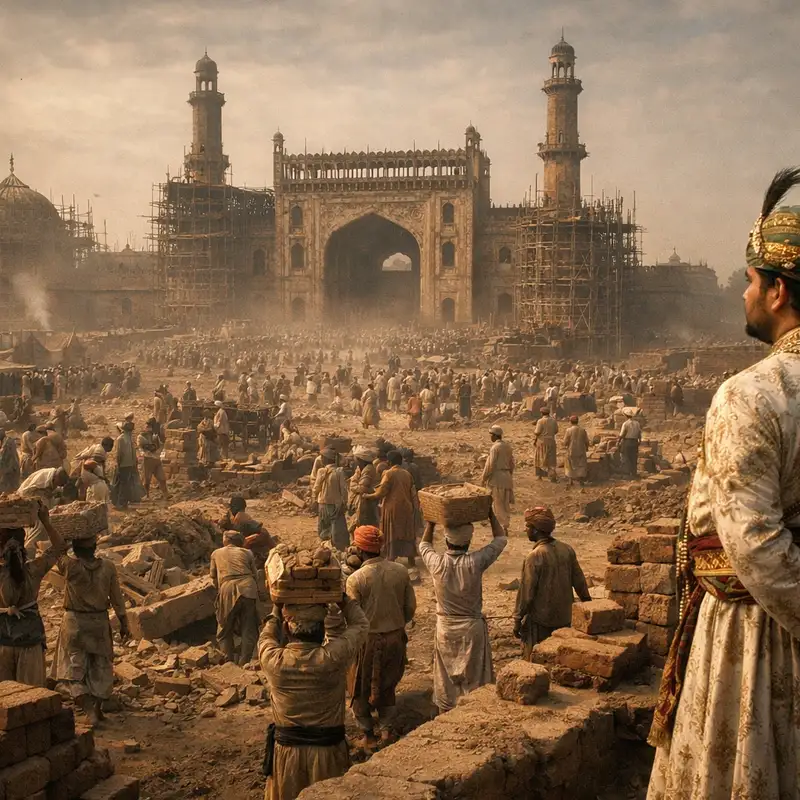
In 1784, when famine gripped Lucknow and hunger hollowed the city’s streets, a ruler chose an unusual response. Instead of charity, Nawab Asaf-ud-Daula commissioned what would become the monumental Bara Imambara — not merely as architecture, but as employment for thousands. This blog unpacks the true story behind the Bara Imambara famine relief project, revealing how crisis, compassion, engineering genius, and political symbolism fused into one of India’s most remarkable monuments. If you’ve ever wondered why Bara Imambara was built, or how the 1784 Lucknow famine shaped the city’s destiny, this is a story of leadership under pressure that still echoes through its vast, pillarless halls.